PL
ACT III
05-08.11
Music, Performance and Discourse
5–8 November 2026 | Młyny Rothera, the Academy of Music, and Mózg Club
The festival culminates in four days of concerts, performances, installations, exhibitions, discussions, and public talks featuring artists from Poland and abroad. The programme presents experimental, improvised, and electroacoustic music alongside interdisciplinary artistic practices, accompanied by conversations with philosophers, scientists, and artists exploring contemporary experiences and understandings of time.
05.11 Thursday

Bożenna Biskupska (Sokołowsko)

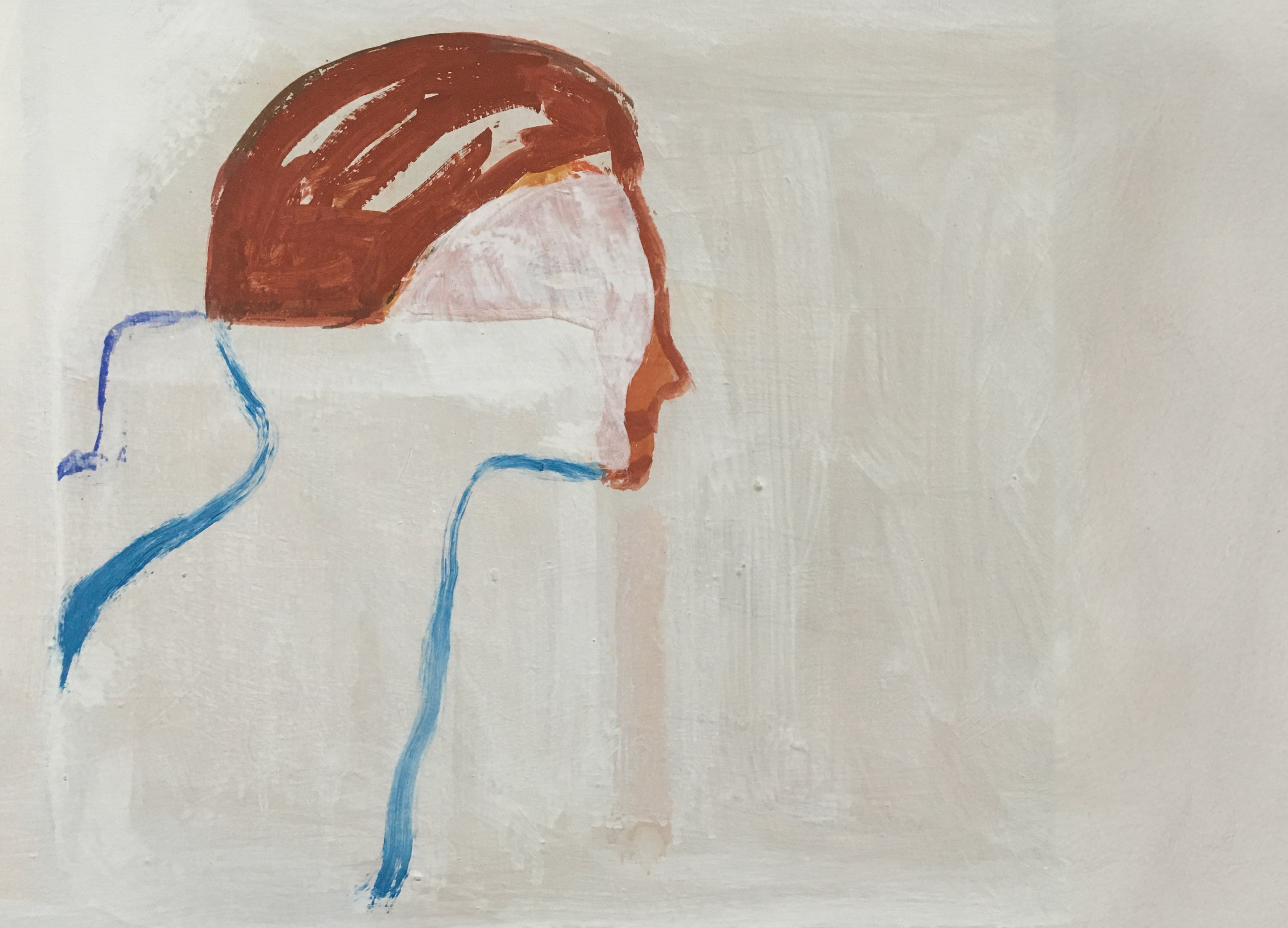
Bożenna Biskupska is a painter, sculptor, and creator of installations and video works. For five decades, she has developed a distinctive artistic language exploring the relationships between matter, space, memory, and time. Working with materials including concrete, bronze, canvas, photographic negative film, and resin, she connects successive works through recurring gestures and signs. At the 22nd Mózg Festival, Biskupska will present an installation related to the exhibition Time Is Being, Being Is Time: Inner Time and the Art of Bożenna Biskupska. Her work has been shown at the Venice Biennale, Zachęta National Gallery of Art, the National Museum in Wrocław, and the Polish Sculpture Center in Orońsko, among others.

Bożenna Biskupska — fot. Łukasz Brodowicz

REONA (Tokyo)

Tokyo-based artist REONA uses tap dance techniques as a means of making music. She is a dancer, improviser, choreographer, designer, and composer. To turn the sounds she imagines into physical action, she works with tap shoes and a wooden board alongside metal sheets, chains, steel bowls, plastic bags, and loudspeakers. Her highly expressive practice, closely related to noise music, connects sound with the movement of her entire body — legs, arms, and voice. She has collaborated with improvisers, dancers, painters, and free-jazz musicians, developing a uniquely intense stage presence.

REONA

06.11 Friday

Jon Rose

For more than fifty years, Jon Rose has redefined the violin as an instrument, an object, and a tool for artistic action. His lifelong project The Relative Violin encompasses original instrument design, environmental performance, extended techniques, radio works, and interactive electronics. Rose has appeared at major festivals of contemporary music, jazz, performance, and sound art, and his discography includes more than one hundred releases. His collaborators include Derek Bailey, Alvin Curran, Otomo Yoshihide, Christian Marclay, and John Zorn. He received the Don Banks Award for lifetime achievement and an outstanding contribution to Australian music.

Jon Rose

Anne Efternøler / Thomas Agergaard / Jørgen Teller / Peter Ole Jørgensen / Johannes Nästesjö

Five artists from the Danish and Scandinavian improvised-music scenes meet in an ensemble built on attentive listening, timbre, and spontaneous composition. Trumpeter Anne Efternøler treats her wind instrument as a source of rhythm and percussive impulses. Saxophonist Thomas Agergaard shapes a distinctive language from silence, resonance, and subtle interaction. Guitarist Jørgen Teller moves between free rock, alternative songwriting, and drone. For nearly five decades, drummer Peter Ole Jørgensen has helped shape Danish improvised music while composing and building his own instruments and sound sculptures. Double bassist Johannes Nästesjö, featured on more than fifty albums, focuses on the spectrum of sound and the relationships between performers. Their concert creates an open space for collective improvisation.

Anne Efternøler
Thomas Agergaard
Jørgen Teller
Johannes Nästesjö
Peter Ole Jørgensen

07.11 Saturday

Natalia Górecka

Natalia Górecka is a pianist specialising in new music, with a particular focus on repertoire for piano and electronics. A graduate of the music academies in Poznań and Bydgoszcz, she regularly gives premieres at international festivals including IMPULS in Graz, Mixtur in Barcelona, Musica Polonica Nova, and the Poznań Music Spring. She has developed her approach to contemporary performance under Nicolas Hodges, Alberto Rosado, and Maria Grazia Bellocchio. Since 2024, she has worked with the Berlin-based label Elektramusic, which released her solo album Triptyque for piano and electronics. Her practice explores the relationships between the acoustic instrument and pre-processed sound material.

Natalia Górecka — fot. Joanna Stoga / NFM

Matt Choboter / Paweł Mańka

The duo of Matt Choboter and Paweł Mańka develops a musical language grounded in microtonality, prepared instruments, electronics, and spatial sound. Sustained structures, drones, and evolving textures emerge through a dialogue between the performers’ decisions and partly autonomous electronic processes. Choboter, a Canadian pianist, composer, and improviser based in Copenhagen, draws on just intonation, South Indian traditions, and Balinese gamelan. Mańka, a Polish composer and guitarist, combines rigorous concepts with improvisation, prepared guitar, and real-time sound processing. Together they create a focused and immersive listening experience.

Matt Choboter
Paweł Mańka

Christian Lillinger & Elias Stemeseder

Christian Lillinger and Elias Stemeseder form an electroacoustic duo working between composition, improvisation, sample culture, serialism, and electronic music. Stemeseder performs on piano, spinet, synthesisers, and electronics; Lillinger works with drums, sampler, and synthesisers. Their music ranges from minimalist murmurs to dense, maximal accumulations of drone, noise, melody, and synthesis. Both are composer-performers with strongly individual musical languages. Together they have developed an ongoing series of releases including Penumbra, Antumbra, and Umbra, in which precise construction continually meets open form.

Christian Lillinger & Elias Stemeseder

Luís Vicente / John Edwards / Vasco Trilla

The trio of Luís Vicente, John Edwards, and Vasco Trilla combines the creative energy of free jazz with the detail and responsiveness of free improvisation. The group emerged from a series of concerts in Portugal, extending Vicente and Trilla’s earlier collaboration documented on the albums a brighter side of darkness and made of mist. Portuguese trumpeter Luís Vicente brings a distinctive compositional voice and extensive international experience. British double bassist John Edwards expands the instrument’s possibilities through remarkable technique and imagination. Vasco Trilla, one of the most active drummers on Barcelona’s improvised-music scene, moves freely between improvisation, jazz-rock, experimental music, and ambient. Each concert becomes a unique and dynamic sonic construction.

Luís Vicente
John Edwards
Vasco Trilla

Madikoptah

Madikoptah is a Warsaw-based selector, promoter, and curator associated with the Regime Brigade collective. For years, she has challenged club conventions by bringing leftfield and broken sounds to the dance floor while supporting grassroots initiatives and emerging local talent. Her practice includes BASSKET, her own event series and platform, her work with Regime Brigade, and appearances for festivals and clubs including Unsound, Ephemera, and Jasna 1. Her sets combine musical unpredictability with a strong sense of club energy.

Madikoptah

08.11 Sunday

Tickets

Admission to all festival events is granted upon presenting an invitation. You can obtain a free invitation on link below.

https://tickets.mozg.pl/

The received electronic invitation should be shown at the festival entrance.


Organizator i partnerzy

About the festival

The International Festival of Contemporary Music and Visual Arts “Mózg Festival” is a gathering of artists working across all areas of contemporary music, performance art, and audio/video installations in which music plays a vital role.

Artists from all over the world are invited to participate, since one of the festival’s core principles is multiculturalism, along with presentations that foster an understanding of the multifaceted nature of cultures. The festival showcases the latest performance techniques and interdisciplinary connections, always within a context that respects tradition. Both outstanding personalities of the art world and young artists whose work already bears the marks of uniqueness are invited to take part.
All artistic activities are treated as a means of gaining deeper insight into the reality that surrounds us, into the transformations taking place in the world, and into personal growth — for both the creators and the audiences of the festival.
To make the ideological framework clearer, each edition of the festival is given a theme. The themes of successive festivals emerge from one another and complement each other, defining the core ideas of the festival’s creators.
The editions of the festival from 2016 to 2021 addressed issues directly related to contemporary social problems, accompanied by the themes: COME DOWN TO EARTH, SPIRITUALITY IS UNIVERSAL, MAKE ART NOT WAR, and ART AS A WAY TO UNDERSTANDING.
We believe that art — especially contemporary art — is a tool for activating the brain’s hidden capacities for perception and comprehension of the world around us. In other words, we assume that art is not an end in itself but a means of reaching other, deeper goals. Throughout history, different forms of artistic activity have fulfilled various social functions, and the same is true for our present times. Art possesses a powerful social role.
From 2022 to 2025, the festival takes place under the motto “DO NOT FORGET TO KEEP YOUR MIND CLEAR.”
We believe that in today’s world — when we are bombarded with an excess of often contradictory or false information, when many values collapse, when the meaning of good and evil becomes blurred, when millions of people live in uncertainty due to ongoing or looming wars and the threat of ecological catastrophe — it is extraordinarily important to make the effort to maintain clarity of mind. Only people who think clearly and independently are capable, as a society, of meeting the challenges of the contemporary world on personal, local, and global levels.
Presenting carefully selected artistic projects and placing them in the right context can significantly enhance the perception of audiences attending performances, lectures, and discussions that are part of the festival. Expanded perception means a clearer mind, capable of making independent and wise decisions.
An individual who engages daily with contemporary art, while also being aware of the cultural diversity of the community around them, gains the chance to live consciously within that community — without fear, with understanding of others’ needs, with the ability to take responsibility for themselves and their fellow citizens, as a member of a developing multicultural civil society.
This year’s festival activities will take place across several venues: Teatr Polski, BWA City Gallery, Rother’s Mills, and the Mózg Club.
In 2025 we are introducing an additional part of the festival — PRELUDE, held a week before the three main festival days. This will be a three-day program of lectures, workshops, and concerts under the title: “Improvisation as Composition in Real Time in the Presence of the Audience.”

The more attentive observers of the festival surely notice our sympathies with the philosophy of Buddhism, in which the practice of clearing the mind of unnecessary thoughts is fundamental. In Buddhism there also exists the practice of repeating certain sentences of varying length — a practice called MANTRA. One possible effect of repeatedly reciting a mantra is a deeper understanding of its content. Hence the idea of repeatedly using the current motto.
This year, however, it has undergone a slight change, taking the form: DO NOT FORGET TO KEEP YOUR MIND CLEAR. Here another Buddhist term comes into play — KOAN, a kind of riddle or paradoxical question used in Zen Buddhism to stimulate intuitive insight and to cultivate wisdom beyond the limits of logical thinking. Let the festival motto in its present form thus become such a KOAN for those willing to solve it on their own. Upon solving it, one may — but does not have to — share the answer with others.

Admission to all festival events is free of charge, but requires an invitation, which can be obtained by sending an email. In carrying out the festival, we declare our intention to implement accessibility principles for people with special needs. Most of the festival’s events will take place in venues adapted to the needs of people with physical disabilities. At the Mózg Club, where we do not yet have facilities for people with reduced mobility, participants will have the possibility to submit a request to attend. Upon receiving such information, staff will be present to assist wheelchair users in entering the building and participating in the event. Printed materials will include a QR code redirecting to a website with accessible versions of the content. Participation of people with hearing impairments should be announced at least 7 days before the event at: fundacja@mozg.art.pl